
Statuario Marble Price in India: Is It Really Worth the Money?
September 26, 2026
Statuario Marble in Kishangarh: Price Ranges Explained
October 12, 2026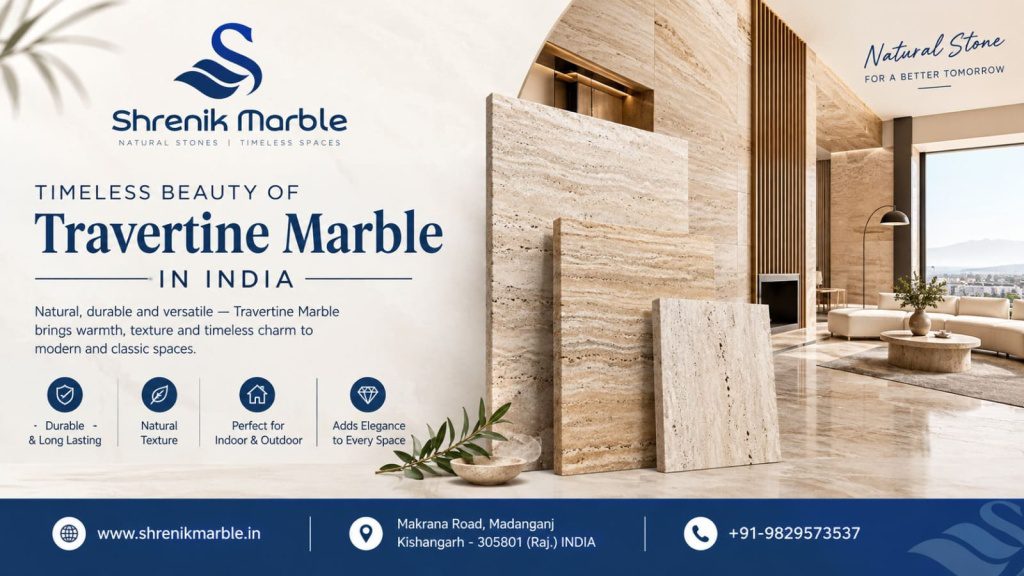
Travertine marble is a natural limestone formed near mineral springs, prized for its warm, earthy tones and distinctive porous texture. In India, travertine stone comes in several varieties — including silver, black, red, beige, and grey travertine marble — and is widely used for flooring, wall cladding, and countertops. Prices vary based on grade, thickness, finish, and whether the stone is Indian travertine or imported Italian marble.
Travertine marble has become a go-to choice for homeowners, architects, and interior designers across India who want a natural stone that feels both timeless and contemporary. Its layered textures and soft, sun-baked color palette bring warmth to spaces that polished granite or marble sometimes can’t replicate. But before you commit to this striking natural stone for your next project, it helps to understand what travertine actually is, the types available, where it works best, and what drives its price in the Indian market.
This guide walks through everything you need to know about travertine marble — from its formation and varieties to design applications, cost factors, and maintenance tips — so you can make an informed decision for your home or commercial space.
What Is Travertine Marble?
Travertine is a form of limestone that develops near hot springs and limestone caves, where mineral-rich water deposits calcium carbonate over time. This natural process creates the stone’s signature look: a textured, slightly porous surface with natural pits and fibrous bands running through it.
Unlike traditional marble, which forms deep within the earth under intense heat and pressure, travertine forms much closer to the surface, often in a matter of decades rather than millions of years. This gives it a more rustic, organic appearance compared to the glossy uniformity of polished marble. Travertine Italian marble, sourced from regions like Tivoli near Rome, is among the most sought-after in the world, but travertine india has also carved out a strong reputation for quality and affordability.
Types of Travertine Marble
Travertine stone comes in a range of colors and patterns, each suited to different design sensibilities.
1. Silver Travertine
Silver travertine has a cool, muted grey-white tone with subtle veining. It works particularly well in modern and minimalist interiors where a neutral, understated backdrop is the goal.
2. Black Travertine
Rarer and more dramatic, black travertine brings depth and contrast to a space. It’s often used as an accent stone — think feature walls or statement countertops — rather than across large surfaces.
3. Red Travertine
Red travertine gets its warm, rust-toned hue from iron oxide deposits. It pairs beautifully with earthy, Mediterranean-style interiors and adds a bold, grounded energy to a room.
4. Beige Travertine
One of the most popular choices in India, beige travertine offers a soft, warm neutral that complements almost any color scheme. It’s a versatile pick for both flooring and wall applications.
5. Grey Travertine
Grey travertine marble sits between silver and beige in tone, offering a contemporary, industrial-chic look. It’s increasingly popular in urban homes and commercial spaces that want a clean, modern aesthetic without sacrificing natural texture.
Applications of Travertine Marble
Travertine’s durability and natural beauty make it suitable for a wide range of uses, both indoors and outdoors.
1. Flooring
Travertine’s slip-resistant texture (especially in its unpolished or tumbled finish) makes it a practical and attractive flooring option for living rooms, hallways, and outdoor patios alike.
2. Wall Cladding
Travertine panels add visual texture and depth to interior and exterior walls. Many architects use travertine cladding to create feature walls that stand out without overwhelming the rest of the design.
3. Countertops & Backsplashes
While slightly more porous than granite, sealed travertine countertops and backsplashes offer a unique, natural look that’s hard to replicate with engineered stone.
4. Other Creative Uses
Beyond the obvious applications, travertine is also used for staircases, fireplace surrounds, garden pathways, and decorative wall art — a testament to its versatility as a design material.
Travertine Marble Price in India: What Influences Cost?
Travertine marble price in India can vary significantly depending on a few key factors.
1. Quality and Grade
Higher-grade travertine with fewer natural voids and consistent coloring commands a premium. Lower grades, which may require more filling and finishing, are typically more budget-friendly.
2. Thickness and Size
Thicker slabs and larger format tiles generally cost more due to the additional raw material and handling required during fabrication.
3. Surface Finish
Polished, honed, tumbled, and brushed finishes each come with different price points. Polished travertine, which requires more processing, tends to be the most expensive finish.
4. Market Trends and Location
Imported marble in Kishangarh — a major hub for the Indian stone industry — often carries additional costs tied to import duties and transportation. Locally sourced Indian travertine, by comparison, can offer better value without compromising on quality.
Why Choose Shrenik Marble for Travertine Marble?
Finding the best marble company in Kishangarh means looking for a supplier who understands both the technical and aesthetic sides of natural stone. Shrenik Marble offers a curated selection of travertine stone — from Indian travertine to imported travertine Italian marble — backed by careful quality checks and finishing standards. Whether you’re sourcing for a large commercial project or a single home renovation, working with an established supplier ensures consistent quality, accurate grading, and reliable delivery timelines.
Maintenance & Care Tips for Travertine Marble
Travertine is relatively low-maintenance, but a few simple habits will keep it looking its best for years.
1. Regular Cleaning
Use a pH-neutral stone cleaner and a soft mop or cloth. Avoid acidic cleaners like vinegar, which can etch the stone’s surface over time.
2. Sealing and Protection
Because travertine is naturally porous, sealing it periodically helps prevent staining and moisture absorption. Most professionals recommend resealing every 12 to 18 months, depending on foot traffic.
3. Spill Management
Wipe up spills — especially acidic substances like wine, citrus juice, or coffee — as soon as possible to prevent discoloration or etching.
Design Inspirations: Transforming Your Home with Travertine
1. Modern Minimalism
Pair silver or grey travertine marble with clean lines and neutral furnishings for a sleek, contemporary look.
2. Rustic Elegance
Beige and red travertine suit farmhouse-style and Mediterranean interiors, adding warmth and organic texture.
3. Luxurious Interiors
Black travertine, used sparingly as an accent, can lend a sense of drama and sophistication to formal living spaces.
4. Outdoor Living
Tumbled travertine pavers are a popular choice for patios, pool decks, and garden paths, thanks to their natural slip resistance and weathered charm.
Bringing Travertine Marble Into Your Next Project
Travertine marble offers a rare combination of natural beauty, durability, and design flexibility that few other stones can match. Whether you’re drawn to the understated elegance of beige travertine or the bold statement of black travertine, there’s a variety suited to nearly every design vision. As you plan your next project, take the time to compare grades, finishes, and suppliers so you can find travertine stone that fits both your aesthetic and your budget.
Frequently Asked Questions
Is travertine marble suitable for Indian weather conditions?
Yes. Travertine handles heat well and stays relatively cool underfoot, making it a practical choice for India’s warmer climates, especially for flooring and outdoor applications.
How does Indian travertine compare to travertine Italian marble?
Indian travertine is generally more affordable and widely available, while travertine Italian marble is often considered a premium option due to its sourcing and finishing reputation. Both offer durability and natural beauty; the right choice depends on budget and design goals.
Does travertine marble require more maintenance than granite?
Travertine is more porous than granite, so it needs periodic sealing to prevent staining. With regular care, though, it remains a durable and long-lasting flooring and surface option.
What is the average price range for travertine marble in India?
Prices vary widely based on grade, finish, and thickness, as well as whether the stone is domestically sourced or imported. For accurate pricing, it’s best to request quotes directly from a supplier like Shrenik Marble based on your project specifications.
Can travertine marble be used outdoors?
Yes, particularly in its tumbled or brushed finish, which offers better slip resistance. It’s a popular choice for patios, pool surrounds, and garden pathways.